
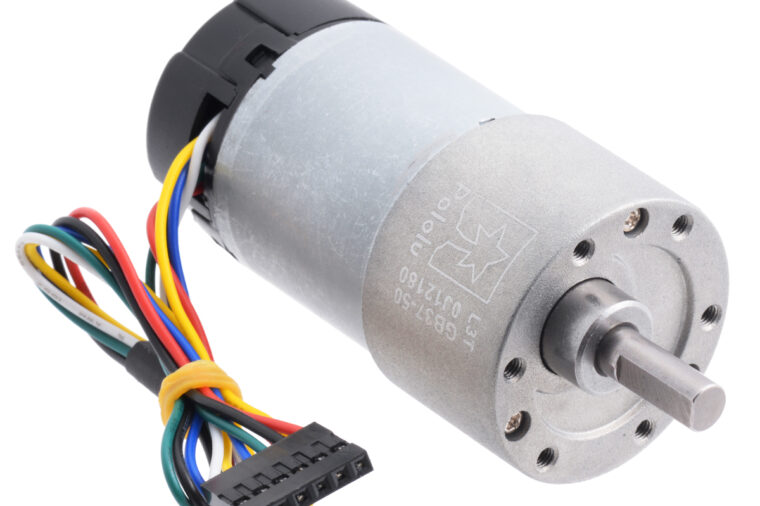
Encoders allow the RoboClaw to provide accurate and consistent speed and position control of motors. In this Application Note we’ll be wiring a common motor and encoder combination to the RoboClaw.
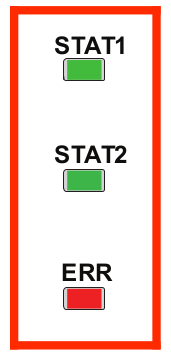
Reading and Troubleshooting RoboClaw Errors
The RoboClaw’s onboard LEDs indicate faults, warnings and notices. Learn how to read the LED blink codes and how to troubleshoot the current, voltage and temperature problems behind the most common errors.
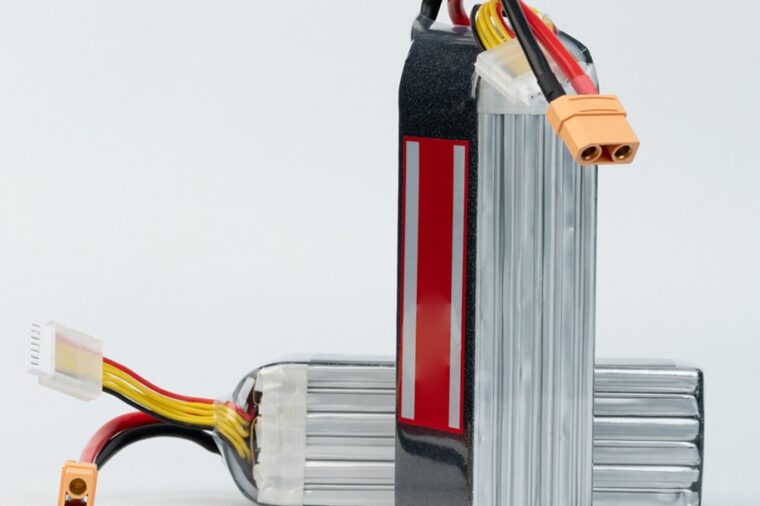
Selecting the Proper Battery
How to choose a battery for a robotics project: compare LiPO, LiFePO4, and lead acid chemistries by voltage, capacity, and C rating to match your robot’s power and run time needs.

RoboClaw Battery Eliminator Circuit (BEC)
Every RoboClaw includes a built-in 5V Battery Eliminator Circuit (BEC) that powers the controller’s logic and external components like microcontrollers, receivers, and encoders from a single battery.

Analog Control with RoboClaw
There are many control schemes available with the RoboClaw. One of the simplest control schemes is analog control. Analog control allows for an analog voltage to control motor speed and direction.
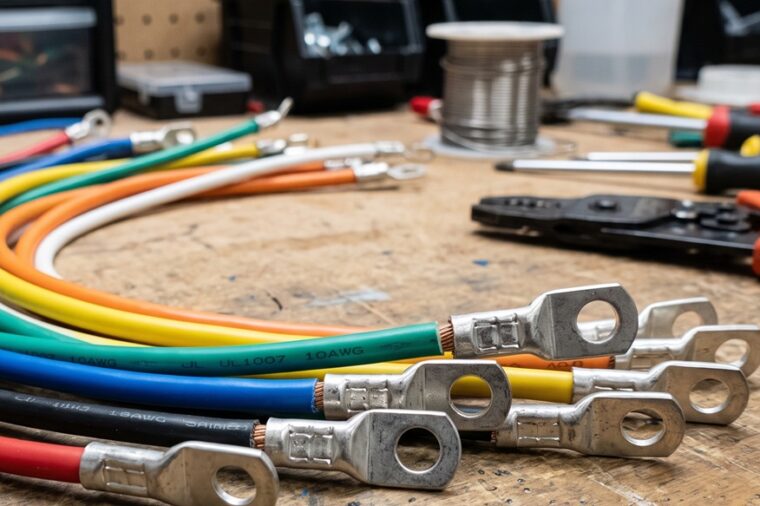
Proper Wire Termination
Wire termination can be a source of problems or a source of reliability depending on how it is done. Learn the right ways to terminate wires for BasicMicro motor controllers: crimp ring and spade terminals, wire ferrules, tinning, and the correct bare-wire technique for screw terminals.

Cyclic Redundancy Check Explained
The RoboClaw uses a mathematical concept called a Cyclic Redundancy Check to ensure data transmitted to and from it hasn’t been corrupted in transit. In this Application Note we’ll cover the in and outs of the CRC.
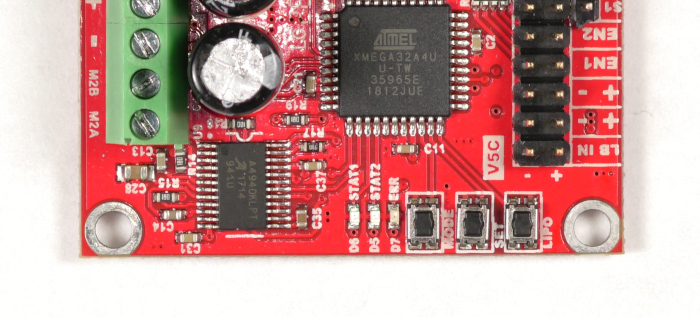
Using Buttons to Configure a RoboClaw
How to configure control mode, mode options, and battery cutoff settings on RoboClaw hardware revisions V5 and under using the onboard MODE, SET, and LIPO buttons, no computer required.
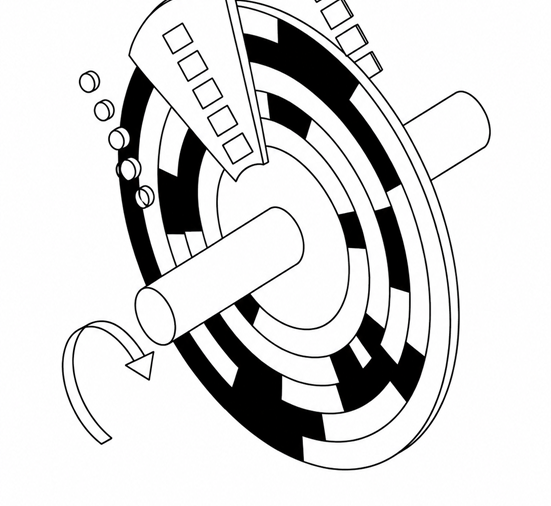
Encoders Explained
Encoders give motor controllers the feedback needed for closed-loop speed and position control. Learn how incremental (quadrature) and absolute encoders work, how they differ, and which to choose for your project.

Simple Arduino Control of the RoboClaw
How to control a RoboClaw motor controller from an Arduino over packet serial: wiring, Motion Studio configuration, and an example sketch using the Basicmicro Arduino library.