
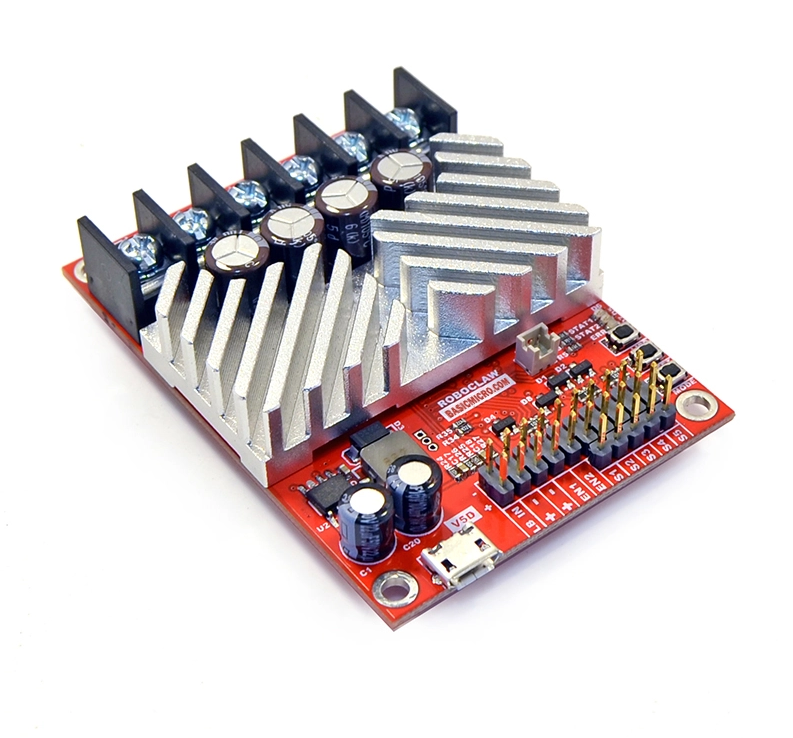
A broad overview of the RoboClaw motor controller: board layout, features, usage basics, and the voltage, current, and temperature limits that apply across all models.

Standard Serial Bus Operation with Arduino
Some robotics projects will require the use of more than one motor controller at a time. RoboClaw supports this type of operation and it’s straightforward to configure and wire.

Using Multiple RoboClaws with Arduino
Some robotic projects make use of more than one motor controller. The RoboClaw is engineered to be used in this fashion with the use of a microcontroller like an Arduino.
Analog Joystick and RoboClaw
The RoboClaw has several useful control methods, one of them being analog control. With analog control you can use a variety of user interface options so long as they output an appropriate analog voltage. In this Application Note we’ll be using an analog joystick to control two motors with the RoboClaw in analog mode.

PID Control and Motor Controllers
Motor controllers like the RoboClaw use feedback from sensors like encoders to maintain the speed and position of motors. Internally, a system called a PID controller keeps these values at their setpoints. This guide covers what a PID controller is, how the proportional, integral, and derivative terms work, and how motor controllers use them.
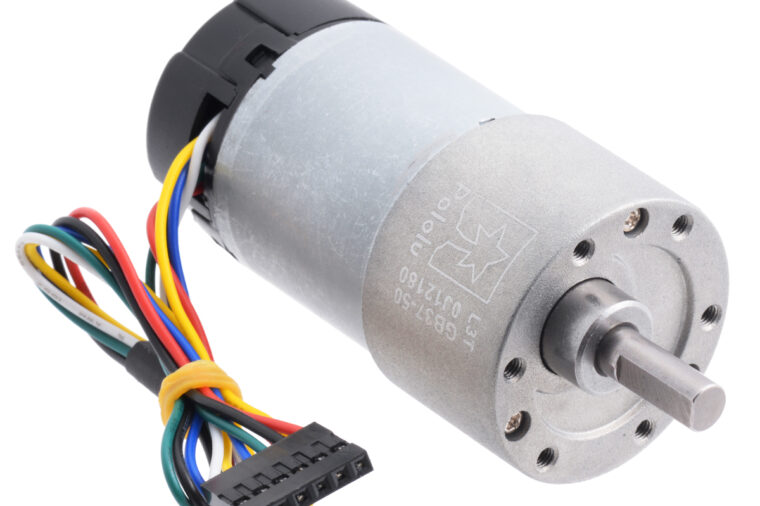
Pololu Encoder Wiring
Encoders allow the RoboClaw to provide accurate and consistent speed and position control of motors. In this Application Note we’ll be wiring a common motor and encoder combination to the RoboClaw.
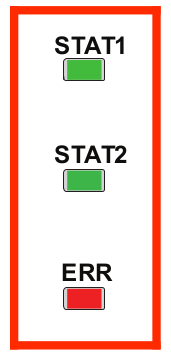
Reading and Troubleshooting RoboClaw Errors
The RoboClaw’s onboard LEDs indicate faults, warnings and notices. Learn how to read the LED blink codes and how to troubleshoot the current, voltage and temperature problems behind the most common errors.
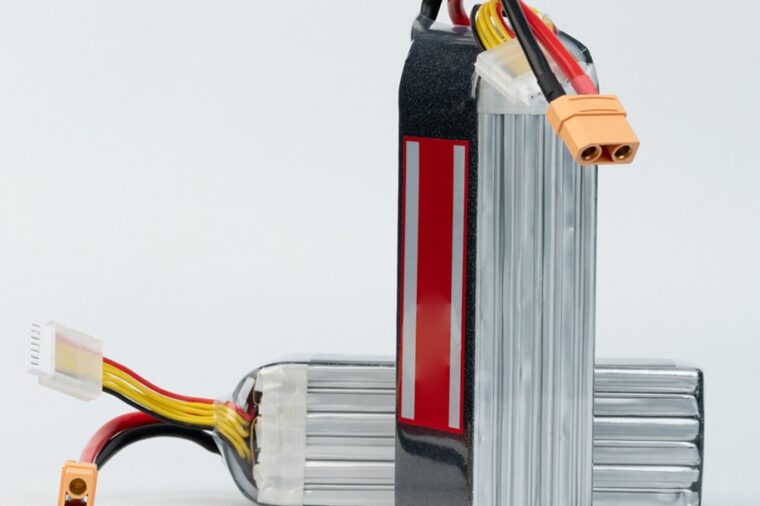
Selecting the Proper Battery
How to choose a battery for a robotics project: compare LiPO, LiFePO4, and lead acid chemistries by voltage, capacity, and C rating to match your robot’s power and run time needs.
RoboClaw Battery Eliminator Circuit (BEC)
Every RoboClaw includes a built-in 5V Battery Eliminator Circuit (BEC) that powers the controller’s logic and external components like microcontrollers, receivers, and encoders from a single battery.

Analog Control with RoboClaw
There are many control schemes available with the RoboClaw. One of the simplest control schemes is analog control. Analog control allows for an analog voltage to control motor speed and direction.